Manual QA Execution
Check user flows, compare behavior with expectations, and keep testing notes clear enough for the whole team.
- Smoke and regression checks
- Exploratory testing
- Checklist-based coverage
A grounded QA toolkit built from testing training, support work, production routines, legal documentation, and live operations where accuracy mattered in real time.
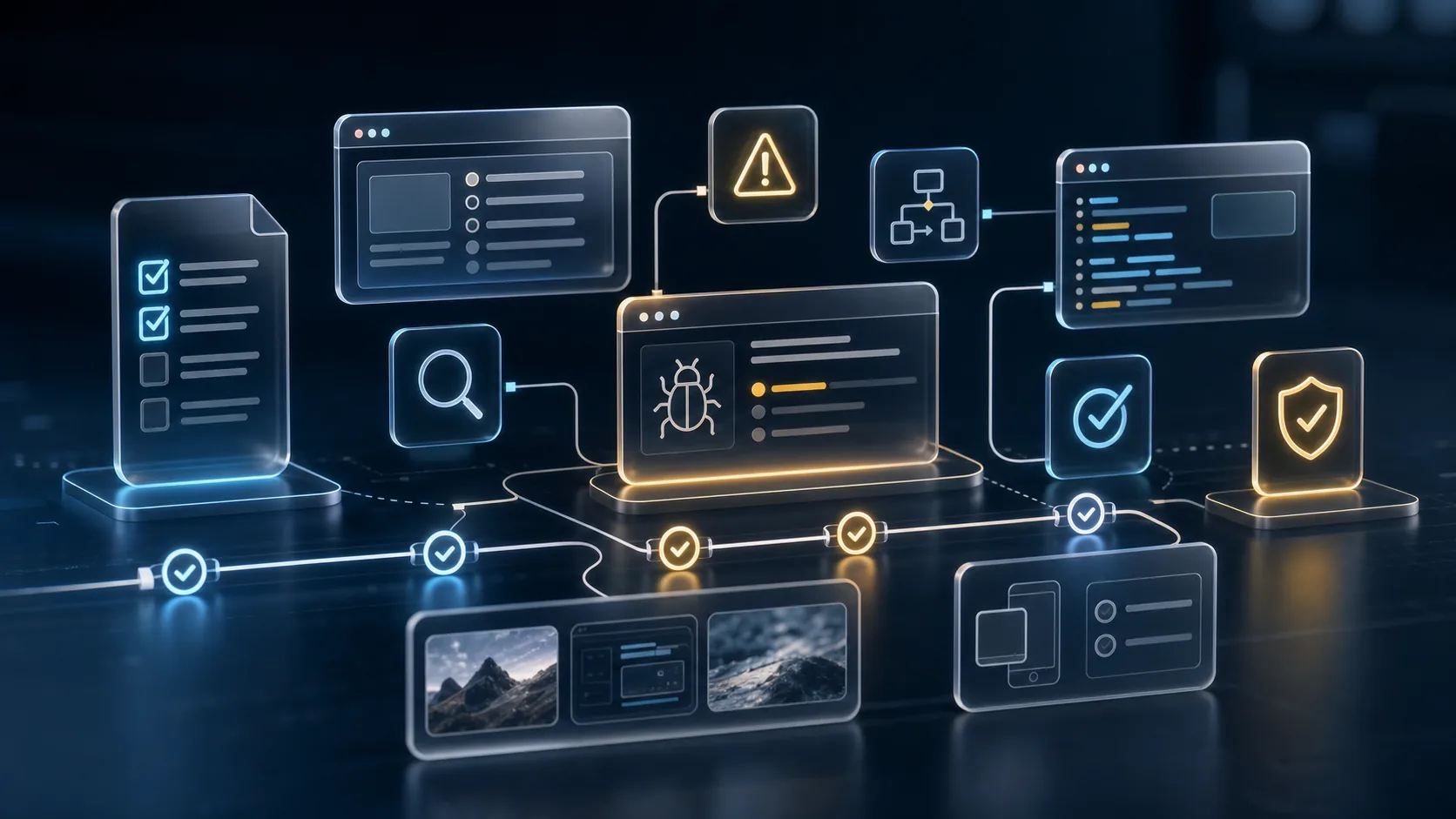
Check user flows, compare behavior with expectations, and keep testing notes clear enough for the whole team.
Write defects with steps, actual result, expected result, context, and user impact.
Read requirements carefully, notice ambiguity, and ask questions before implementation issues become product issues.
Use experience from production and regulated workflows to follow procedure without losing practical judgment.
Build simple automation flows that support testing work, connect tools, and make QA follow-up easier to track.
I test like a user, document like a teammate, and think in risks: what can break, who feels it, and what evidence helps the team decide.
Start with the user path, business goal, acceptance criteria, and the place where a mistake would hurt most.
Choose checks that give useful information quickly: happy path, edge cases, regression areas, and visible UI states.
Turn observations into clear bug reports with steps, expected result, actual result, evidence, and user impact.
Retest fixes, watch related behavior, and leave a final status that is easy for developers and leads to read.
The result is not just a passed or failed check. The team gets a clear view of what works, what is risky, what needs a fix, and what has already been retested.
Testing vocabulary, test process, test design, defects, and risk-based thinking.
WorkflowJiraIssue tracking, backlog work, QA handoff, bug reports, and team visibility.
API BasicsPostmanRequest checks, response review, API exploration, and clearer communication with developers.
Browser QAChrome DevToolsInspect UI behavior, console errors, network requests, responsive views, and page states.
Automationn8nBuild webhook flows, connect APIs, route form data, send notifications, and support repeatable QA processes.